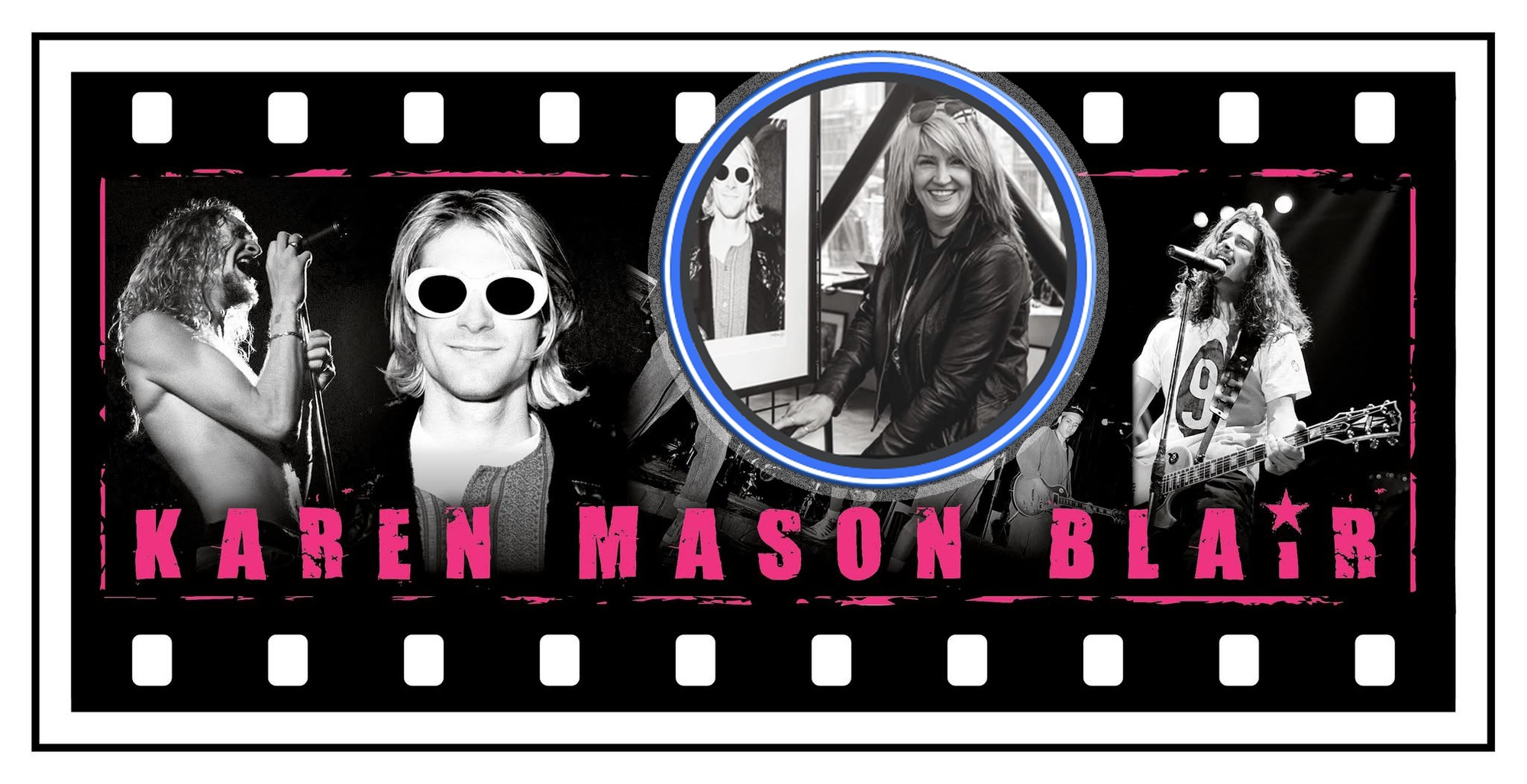

If you’ve lived in Seattle long enough, you remember the rumble. It wasn’t just the amps; it was the heartbeat of a city that suddenly found itself the undisputed music capital of the world. I grew up in the clubs, basements, and dive bars of this city, a decades-long fan of a live music scene that felt like lightning in a bottle. We stood shoulder-to-shoulder with the very people who would go on to define a generation.
But I have to be honest about where I’ve been lately: sitting at home. Over the last ten years, I’ll admit I threw in the towel. Our once-legendary live music ecosystem has felt like it’s on life support. Between historic venues shutting their doors and a shifting culture, the scene has felt like a ghost town. Couple that dying music landscape with the undeniable reality of rampant crime, property theft, and very real street-level safety concerns, and heading downtown for a gig just stopped feeling worth the risk. I had given up on the Seattle I used to know, writing it off as a bygone era paved over by a chaotic, unrecognizable modern city.
Then, a few days ago, I stumbled across her Facebook post about opening Grunge Mart. It was a relief to see a bud of growth in this city that seems only to bring closure after closure — and oh, let’s not forget COVID, as if that didn’t just about bring every customer-based small business to its knees. But I digress.
My interest piqued, I started digging into her current hubs and galleries, and further back, into how she got here in the first place. What I found stopped me: Karen isn’t just preserving photographs. She is actively guarding the soul of Seattle music, and she’s been doing it since before most of us knew there was a soul worth guarding.
Wrong genre, right city, exactly the right moment
Karen wasn’t some out-of-town journalist who parachuted in once grunge became a buzzword. She grew up around here — Edmonds High School, then a commercial photography degree from Seattle Central College — and her first instinct as a working photographer wasn’t even grunge. She moved to Hollywood first, shooting hair-metal acts like Metallica and Poison, before coming back to Seattle just as this other, stranger thing was starting to happen in the clubs and basements downtown. Wrong genre, right city, exactly the right moment.
Because she was local, because she was already one of us, bands trusted her in a way they never trusted the photographers parachuting in from magazines. With Alice in Chains especially, that trust ran both directions — she wasn’t just showing up with a camera, she was driving band members around town, feeding them, lending them clothes when they needed it. That’s not the kind of access you get with a press pass. That’s the kind of access you get from being somebody’s friend first, and a photographer second.
Her resume reads like the Holy Grail of 90s rock history, and now I know some of the stories behind it. She holds what are believed to be the only known photographs of Pearl Jam’s first-ever show, at the Off Ramp Café on October 22, 1990 — Jeff Ament reportedly called her himself to come shoot it. She shot Alice in Chains’ first-ever session for Rolling Stone. She was there for Soundgarden too, documenting the band around the time Ben Shepherd stepped in on bass. And she captured Nirvana goofing around in Santa hats in 1991 — a photo Kurt Cobain apparently liked enough that he personally submitted it for use in Nirvana’s In Utero packaging two years later. The cover image of Nirvana’s Live at the Paramount DVD is her frame too, and if you watch the footage closely, she’s in it — shooting the show as it happened, becoming part of the historical record instead of just capturing it.
She walked away too. Then she came back.
What I didn’t know before this week is what came after. The music industry of the ’90s was brutal for a woman doing what she did, and at some point Karen stepped back from it almost entirely, spending years shooting weddings instead. Her archive of negatives just sat there — until around 2016, when it started getting rediscovered. That led to The Flannel Years in 2019, a book of over 150 photographs, some never before released, with a foreword written by Nirvana’s own Krist Novoselic. It led to a Gibson Guitar documentary about her career, fittingly titled Through the Lens. It led to a spot on Pawn Stars in 2022, and features in Entertainment Weekly and People. There’s something in that arc I recognized a little too well: she walked away from this scene too, for her own reasons, and found her way back to it. Now she’s making sure the rest of us can too.
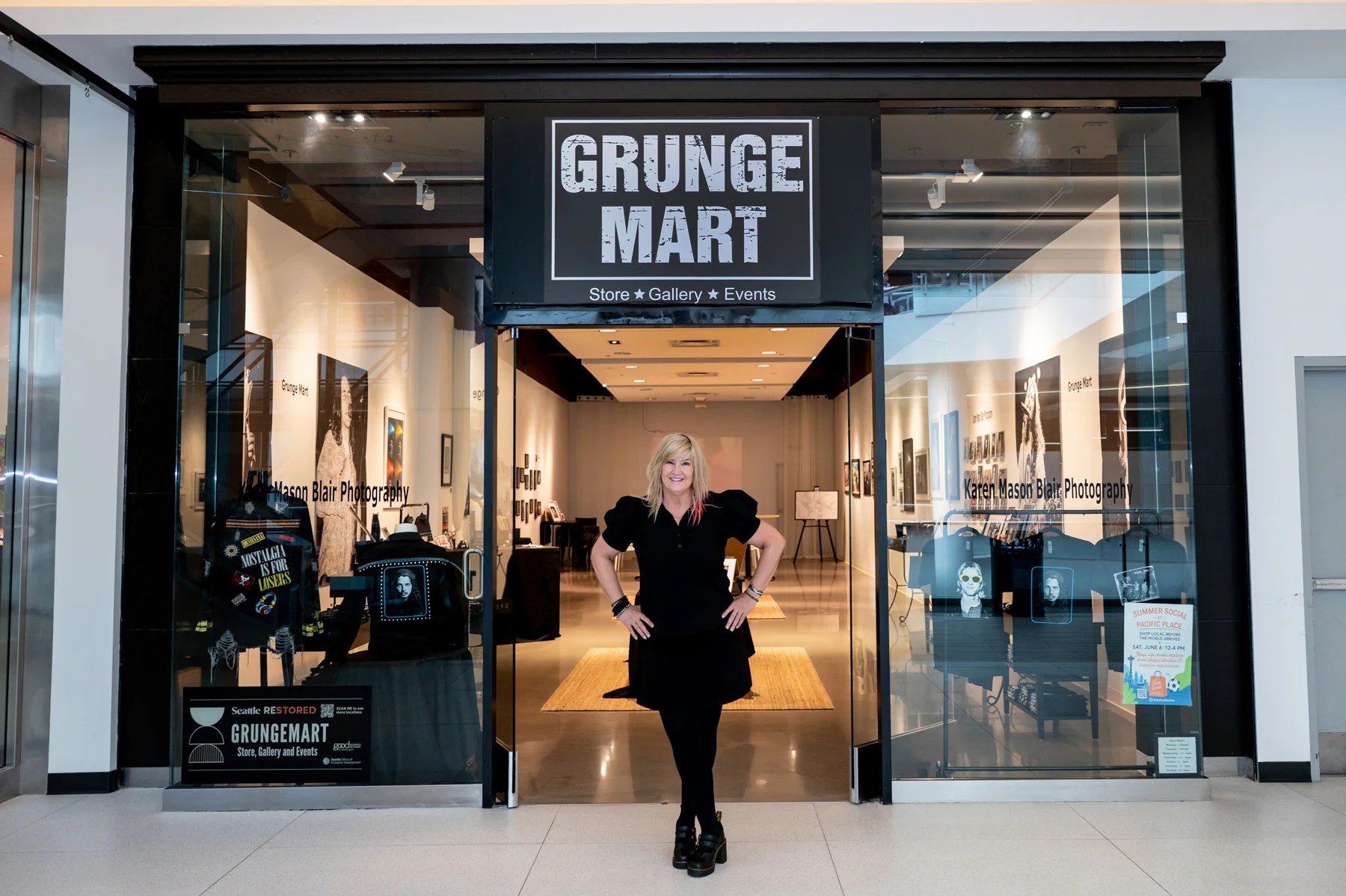
A beacon on the third floor of Pacific Place
Today, she has made it incredibly easy for disillusioned locals and global fans alike to reconnect with that raw energy. You can access GRUNGEMART through her website — an online and retail celebration of the era featuring exclusive promo photos, shirts, and curated memorabilia. In a bold and beautiful move for the city, she even operates a physical Grunge Mart retail store on the 3rd floor of the Pacific Place Mall. It’s a much-needed beacon of culture right in the heart of downtown.
For the serious collectors, her fine art photography is represented by the prestigious Morrison Hotel Gallery. And for those of us who just want to hear the old stories and remember what it felt like to be there, she shares her memories across her YouTube channel and Instagram.
It is far too easy for native Seattleites like myself to get bitter, to lock our doors, and mourn the safety and vibrant culture we feel we’ve lost. But seeing Karen Mason Blair’s ongoing dedication to this city’s legacy is a wake-up call. Her photos are a reminder that the magic we remember really did happen here. We lived it.
If you, like me, have stepped away from the Seattle scene in recent years out of frustration or fear, do yourself a favor: look through Karen’s lens. She stepped away once too. She found her way back. You might just remember why you fell in love with this city in the first place.